Whatever You Need to Learn About the L1 copyright: Benefits, Requirements, and A lot more
The L1 copyright functions as a vital tool for multinational firms looking for to transfer staff members to the United States, promoting both operational efficiency and the transfer of specialized expertise. With distinctive classifications for executives and specialized experts, this copyright presents many benefits, including prospective paths to long-term residency. Recognizing the eligibility requirements and application process is necessary for a successful shift. As we check out the complexities of the L1 copyright, it ends up being clear that navigating its complexities is extremely important for organizations aiming to take advantage of international ability successfully. What challenges might you run into in the process?
Summary of the L1 copyright
The L1 copyright is a non-immigrant classification that enables business to move employees from international workplaces to their U.S. branches, subsidiaries, or associates. This copyright classification is specifically advantageous for international firms seeking to leverage their international skill pool by relocating key workers to enhance operations in the USA. The L1 copyright is separated right into 2 main subcategories: L1A for supervisors and execs, and L1B for staff members with specialized understanding, each providing to various organizational needs.The L1 copyright helps with the seamless activity of certified employees, therefore promoting international business growth and operational performance. With the L1A copyright, companies can move individuals that hold supervisory or executive functions, permitting them to make tactical decisions and look after particular departments within the united state entity. Alternatively, the L1B copyright is developed for staff members having specialized expertise vital to the company's passions, making sure that the united state office gain from one-of-a-kind skills and expertise.One remarkable advantage of the L1 copyright is its twin intent nature, which allows owners to look for long-term residency while keeping their non-immigrant status. Additionally, partners and youngsters of L1 copyright holders can accompany them to the United States under the L2 copyright category, which additionally enables for job permission
Sorts Of L1 Visas
Numerous types of L1 visas satisfy the diverse demands of multinational firms wanting to move employees to the United States. The two key classifications of L1 visas are L1A and L1B, each created for certain functions and duties within an organization.The L1A copyright is intended for supervisors and executives. This category permits firms to transfer people that hold managerial or executive positions, allowing them to supervise operations in the U.S. This copyright stands for an initial duration of as much as three years, with the possibility of extensions for a total amount of approximately 7 years. The L1A copyright is especially helpful for companies looking for to develop a solid leadership visibility in the U.S. market.On the various other hand, the L1B copyright is assigned for staff members with specialized knowledge. This consists of people who have sophisticated competence in specific locations, such as proprietary technologies or unique processes within the firm. The L1B copyright is also valid for an initial three-year period, with expansions available for up to 5 years. This copyright classification is excellent for firms that require staff members with specialized abilities to improve their procedures and keep a competitive edge in the U. L1 copyright.S.Both L1A and L1B visas permit double intent, suggesting that copyright holders can make an application for permanent residency while on the copyright. Comprehending the differences between these two groups is necessary for companies intending to browse the intricacies of staff member transfers to the USA effectively
Qualification Demands
To certify for an L1 copyright, both the employer and the employee have to meet particular qualification criteria set by united state migration authorities. The L1 copyright is created for intra-company transferees, enabling international firms to move employees to their U.S. offices.First, the company should be a qualifying organization, which suggests it must have a moms and dad company, branch, subsidiary, or associate that is working both in the U.S. and in the international country. This partnership is important for showing that the worker is being moved within the exact same business framework. The company needs to also have actually been doing organization for at the very least one year in both locations.Second, the staff member should have been used by the foreign business for at the very least one continuous year within the three years preceding the application. This work needs to remain in a managerial, exec, or specialized knowledge capacity. For L1A visas, which satisfy supervisors and execs, the worker has to demonstrate that they will continue to run in a comparable capability in the united state For L1B visas, meant for staff members with specialized knowledge, the private need to have one-of-a-kind proficiency that contributes substantially to the company's procedures.
Application Process
Steering the application process for an L1 copyright involves several crucial steps that should be completed precisely to guarantee a successful outcome. The primary step is to determine the suitable classification of the L1 copyright: L1A for supervisors and executives, or L1B for employees with specialized knowledge (L1 copyright). This distinction is significant, as it impacts the documentation required.Once the group is identified, the U.S. employer need to submit Form I-129, Petition for a Nonimmigrant Worker. This type ought to consist of thorough information regarding the business, the staff member's role, and the nature of the job to be carried out in the united state Accompanying paperwork generally consists of evidence of the connection in between the U.S. and international entities, evidence of the staff member's credentials, and info relating to the work offer.After entry, the united state Citizenship and Immigration Services (USCIS) will evaluate the application. If authorized, the staff member will certainly be informed, and they can then use for the copyright at a united state consulate or consular office in their home nation. This involves completing Form DS-160, the Online Nonimmigrant copyright, and setting up an interview.During the meeting, the candidate must provide numerous records, consisting of the authorized Kind I-129, proof of employment, and any kind of extra sustaining evidence. Complying with the meeting, if the copyright is approved, the employee will receive a copyright stamp in their key, allowing them to enter the united state to function for the funding company. Appropriate prep work and complete documents are key to navigating this process successfully
Advantages of the L1 copyright
One of the remarkable advantages of the L1 copyright is its ability to promote the transfer of essential employees from international workplaces to the United States. This copyright is particularly beneficial for international companies looking for to preserve uniformity in procedures and leadership throughout boundaries. By enabling executives, supervisors, and specialized employees to work in the united state, companies can guarantee that their most essential talent is available to drive service objectives.Another significant benefit of the L1 copyright is its fairly uncomplicated application process contrasted to various other work visas. Organizations can petition for the L1 copyright without the demand for a labor certification, which streamlines the recruitment of international staff members. The copyright can be granted for a preliminary duration of up to three years, with the opportunity of extensions, promoting long-lasting assignments.The L1 copyright likewise offers a course to permanent residency. Workers More Info on L1A visas (for supervisors and execs) can look for a Permit after one year, expediting their change to permanent status. This attribute is an attractive motivation for talented people trying to find stability in the U.S. workforce.Additionally, L1 copyright owners can bring their prompt relative to the united state under L2 status, allowing spouses and youngsters to stay and study in the nation, boosting the overall allure of this copyright classification. Overall, the L1 copyright functions as a vital device for worldwide organizations, fostering cross-border partnership and talent wheelchair.
Usual Obstacles
While the L1 copyright offers countless benefits for multinational firms and their staff members, it is not without its challenges. One notable hurdle is the rigid documents and eligibility demands imposed by the U.S. Citizenship and Immigration Solutions (USCIS) Companies must offer comprehensive proof of the foreign worker's certifications, the nature of the business, and the certifying connection between the U.S. and foreign entities. This process can be lengthy and might need legal knowledge to browse successfully.Another challenge is the possibility for analysis throughout the request process. USCIS officers might examine the authenticity of business procedures or the worker's function within the company. This examination can bring about hold-ups and even rejections of the copyright, which can considerably impact the firm's functional strategies and the worker's job trajectory.Furthermore, the L1 copyright is connected to the funding company, which suggests that task modifications can complicate the copyright status. If an L1 copyright owner wants to switch over employers, they must typically seek a different copyright classification, which can add complexity to their migration journey.Lastly, maintaining compliance with L1 copyright guidelines is important. Employers should ensure that their staff member's function aligns with the initial petition which the business remains to fulfill the qualification requirements. Failure to do so can cause retraction of the copyright, influencing both the staff member and the organization. These challenges demand comprehensive prep work and recurring administration to guarantee an effective L1 copyright experience.
Tips for Success

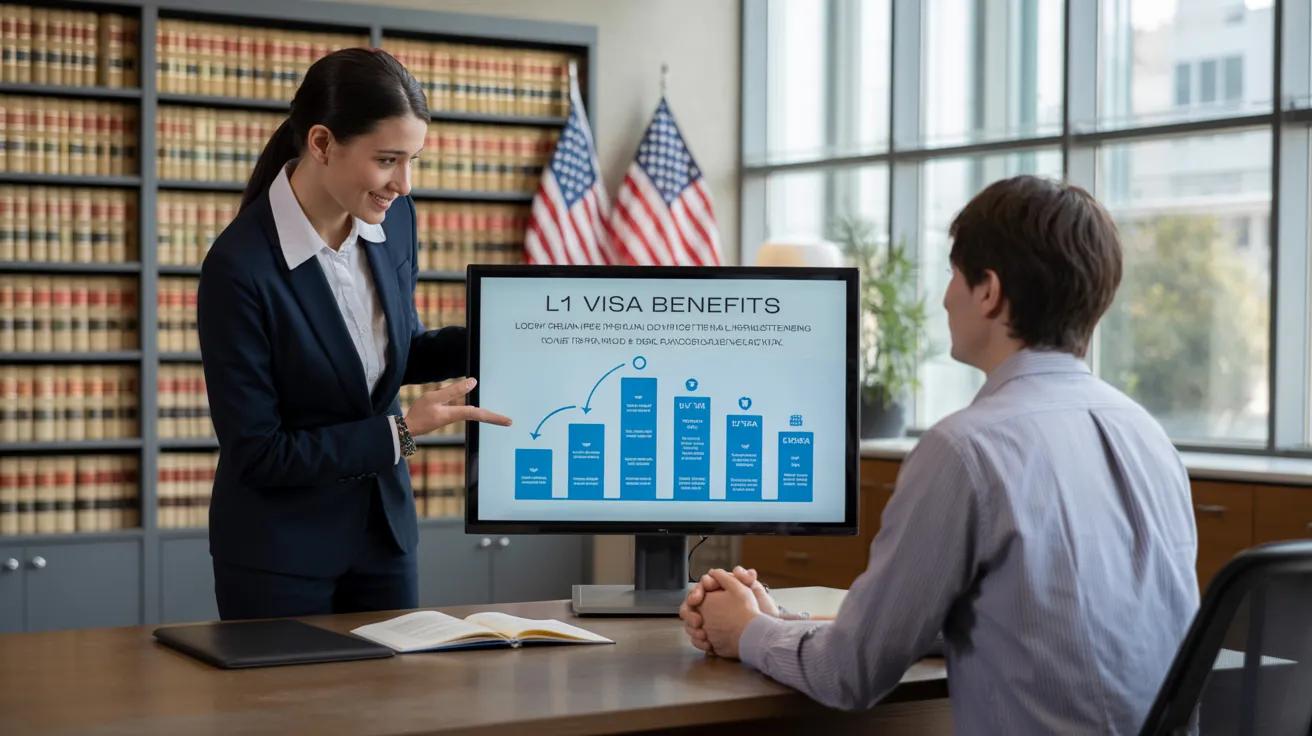
To successfully navigate the L1 copyright process, meticulous prep work is essential. Begin by completely recognizing the details needs for the L1 copyright group you are making an application for, whether L1A for managers and executives or L1B for employees with specialized expertise. Gather all required paperwork early in the process, consisting of proof of your employment history, organizational framework, and the nature of business operations.Engage legal advice experienced in immigration law to guide you with the complexities of the application. A lawyer can aid ensure that your application is complete, accurate, and compelling. They can also aid in preparing for potential demands for proof (RFEs) by proactively dealing with areas that might elevate questions.Additionally, maintain clear interaction with your employer, who have to give crucial support for your application. Validate that they understand their duties, including submitting the necessary petitions and giving documents that confirms your duty in the organization.Prepare for the copyright meeting by practicing solution to typical concerns regarding your expert background and the nature of your work. Demonstrating self-confidence and clarity can greatly influence the end result of your application.
Frequently Asked Concerns
Can Family Members Accompany L1 copyright Holders?
Yes, household members can accompany L1 copyright holders. Partners and single youngsters under 21 years of ages are eligible for L2 visas, which permit them to live and study in the United States throughout the L1 owner's remain.
How Long Can L1 copyright Owners Remain in the U.S.?
L1 copyright owners can initially remain in the united state for up to three years. This period might be prolonged, enabling an optimum keep of 7 years for L1A copyright owners and five years for L1B copyright owners
Is the L1 copyright a Double Intent copyright?
The L1 copyright is taken into consideration a twin intent copyright, allowing holders to go after long-term residency while preserving their short-lived non-immigrant condition. This flexibility assists in long-term occupation opportunities for global employees within U.S. companies.

Can L1 copyright Holders Apply for a Permit?
Yes, L1 copyright holders can make an application for an environment-friendly card (L1 copyright). The L1 copyright sustains twin intent, allowing owners to seek permanent residency while preserving their non-immigrant condition, assisting in a smoother changeover to a permit
What Takes place if an L1 copyright Is Rejected?
If an L1 copyright is refuted, the candidate might get a notice outlining the reasons for rejection. They can appeal the choice, reapply, or explore alternate copyright alternatives relying on their circumstances and qualifications.
Verdict
In recap, the L1 copyright functions as a crucial instrument for international business seeking to move workers to the United States. Comprehending the differences between L1A and L1B classifications, together with the qualification needs and application processes, is vital for effective navigation of this non-immigrant category. The benefits supplied, including structured applications and pathways to irreversible residency, better enhance its allure. L1 copyright. Dealing with common obstacles properly can cause an extra desirable result in the copyright procedure